Resilience01

The Disappearing Model
Your AI provider is still online—but the model your business depends on has disappeared. What does it take to restore the business capability?
Article · 5 min read↗
Ideas across the archive
Start with a question. Follow it through the system.
30 articles and frameworks
Your AI provider is still online—but the model your business depends on has disappeared. What does it take to restore the business capability?

Why changing a model name does not necessarily restore the behaviour, controls or service level an AI product depends on.

The published lifecycle evidence shows why AI infrastructure can have a shorter and more provider-controlled life than it appears.

Portability has a real cost. This decision framework helps judge when the price of an AI escape route is worth paying.

Practical engineering patterns for model substitution, including internal contracts, evaluation suites, shadow testing and a proportionate fallback path.

A practical 30-day exercise for testing how an organisation would cope if its primary AI model became unavailable tomorrow.

Moore’s Law improved the machinery. AI also grew because we chose to use vastly more of it.

Superposition, interference and expert routing explain why capacity and useful computation are different things.

The visible AI increasingly includes reasoning, retrieval, tools and checks surrounding a foundation model.

Power, memory, data and capital place different constraints on the next increase in useful AI.

MIT’s work on diminishing returns makes a provocative case. The choice of capability metric changes its meaning.

There are several routes beyond brute force. They solve different problems and are at very different stages of maturity.

Frontier models could become intelligence foundries. Specialist models, continuity plans and governed operational experience may change what organisations pay for — and what they can preserve.

How to evaluate useful intelligence, prepare for competing futures and keep the system around the model accountable.
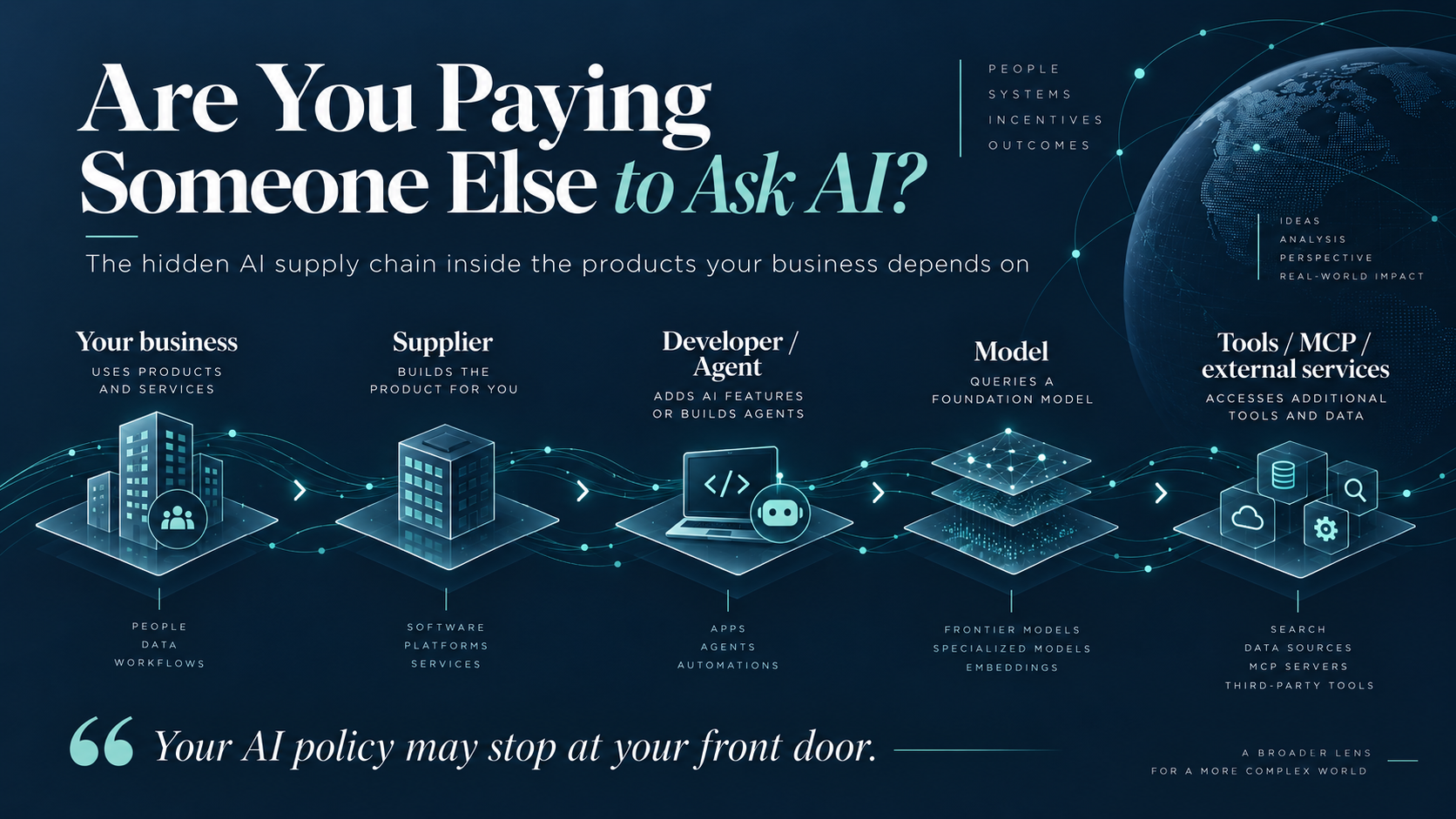
Your internal AI policy may not follow information into your supplier’s development and support processes.

A blanket label conceals important differences between public feeds, video libraries, messaging services and school communities.
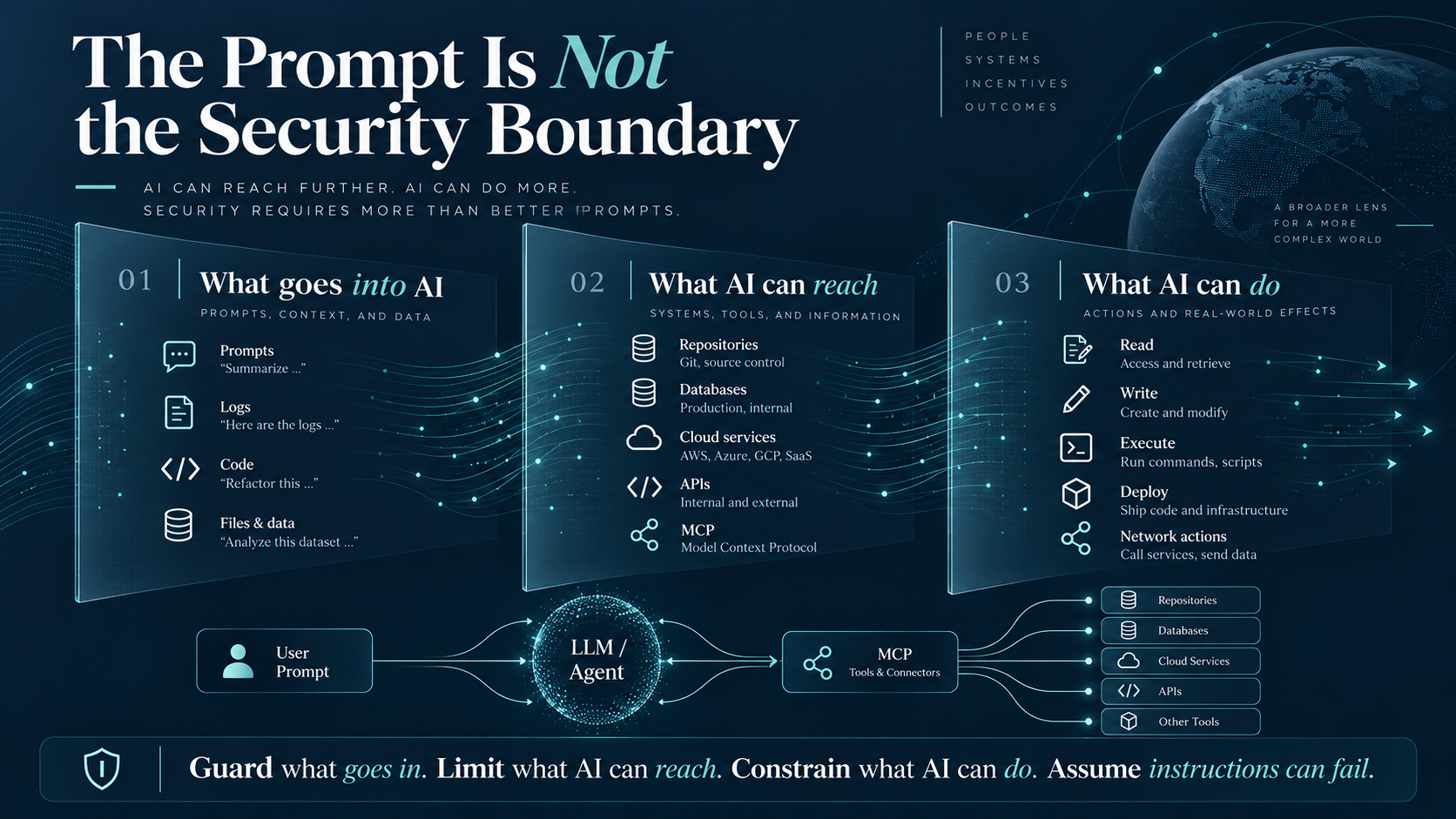
Agents turn an information question into a permissions question. What can they reach, and what can they do?

Age restrictions sound simple until identity, privacy, proportionality and circumvention become part of the design.

Some children use repeated language, songs and situations as material for communication and learning.
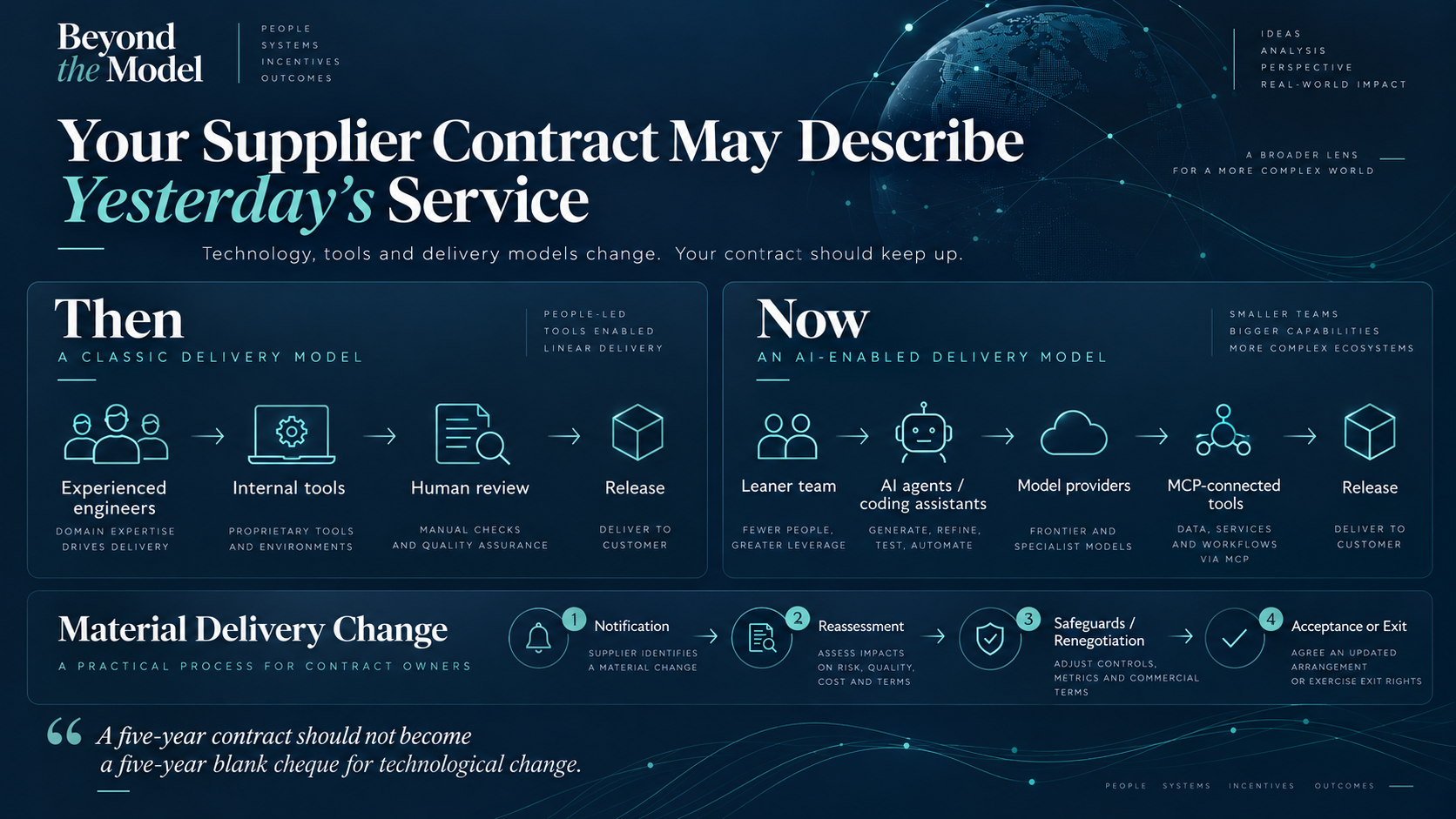
The product may look unchanged while its delivery model, data flows and human oversight have shifted.

Recommenders perform an editorial function at immense scale, but their choices are governed differently from a broadcast schedule.
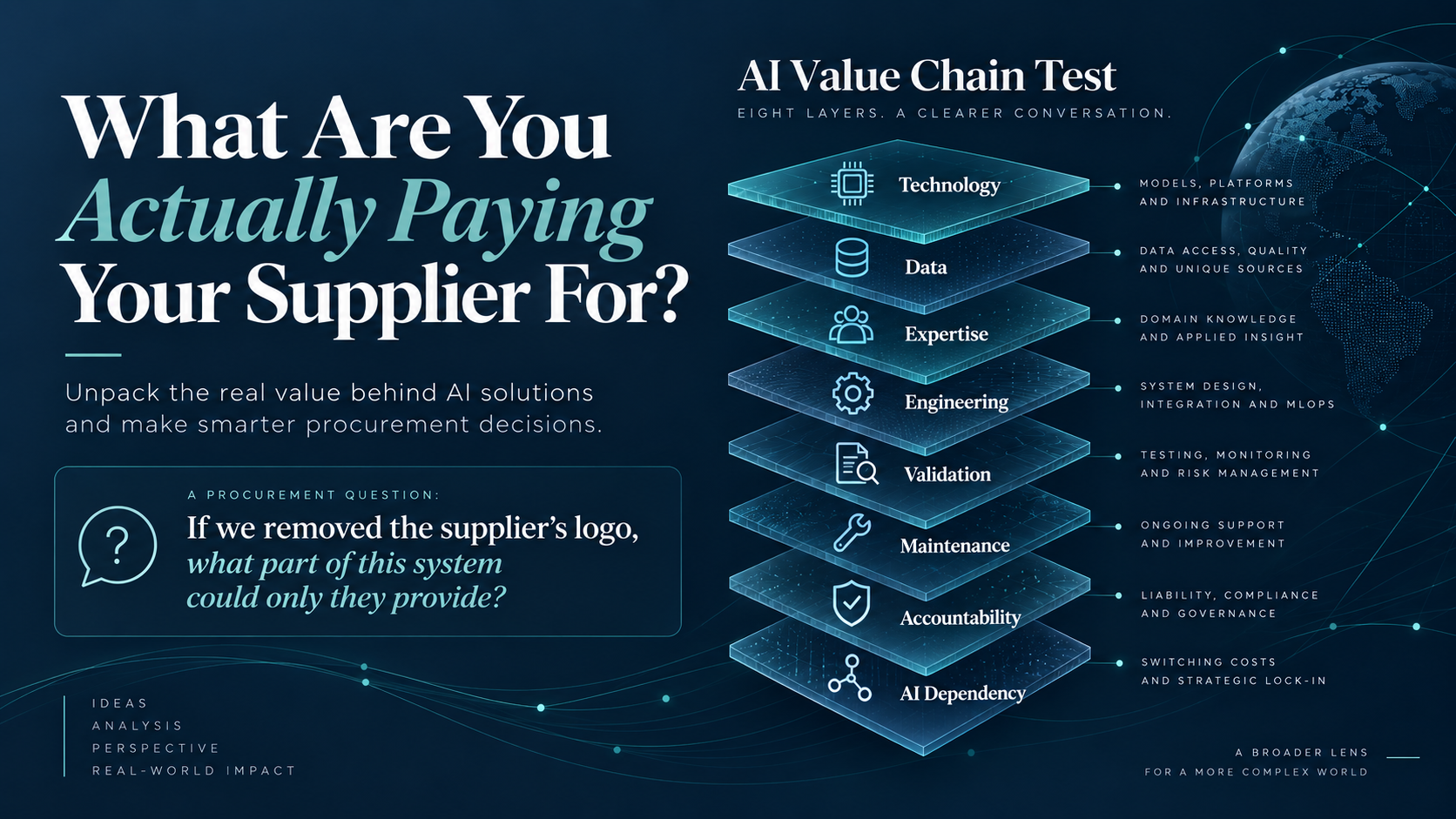
The AI Value Chain Test separates access to common technology from expertise, validation and accountability.

Attention can serve learning, creativity, connection and entertainment without becoming the final measure of value.
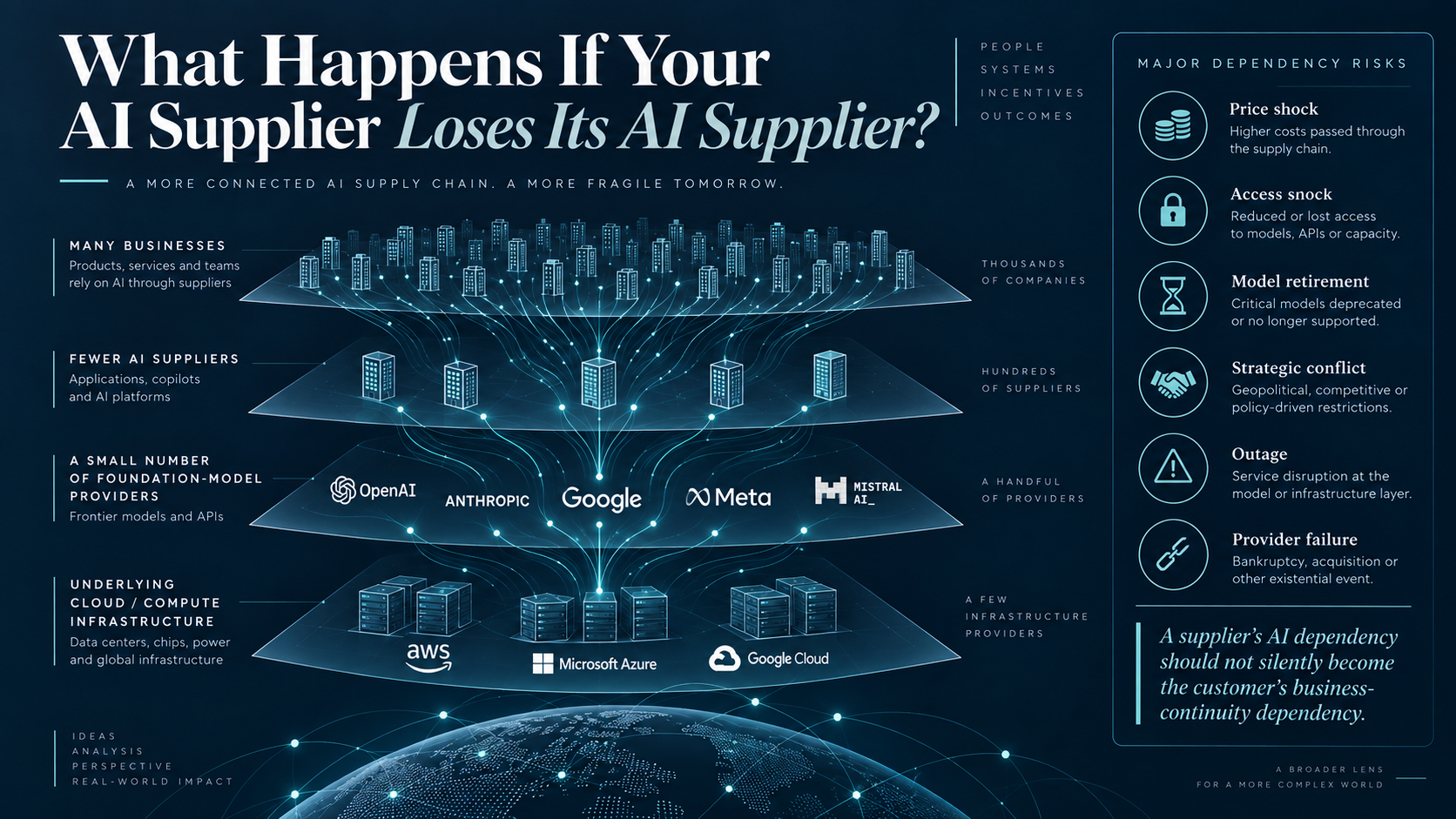
A claim to support multiple models is not the same as a tested plan to keep your service running.

Feedback loops can make inferred preferences increasingly influential without proving that the person underneath has changed.
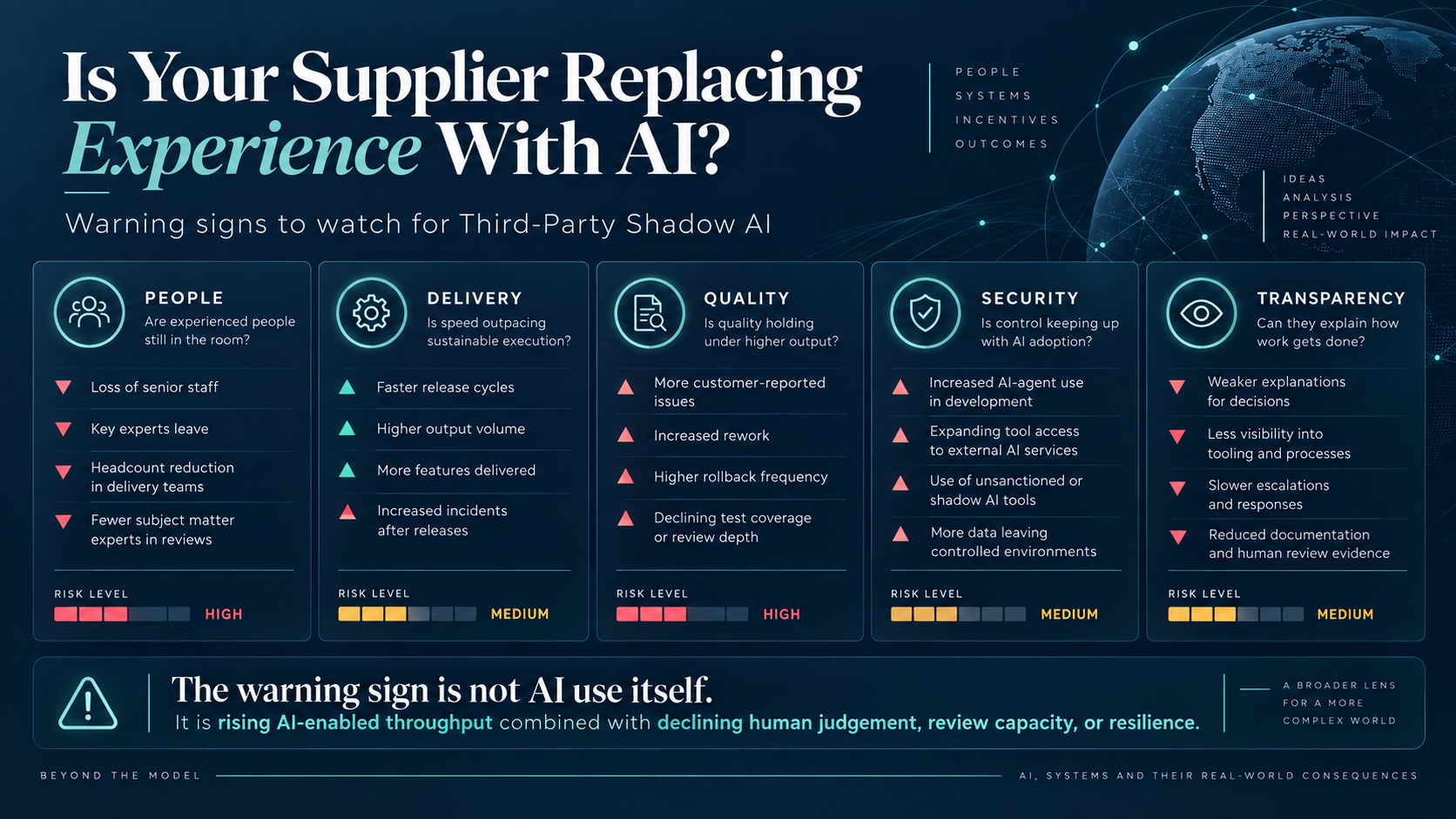
Watch for patterns in review capacity, service quality and technical ownership, rather than treating layoffs or faster releases as proof.
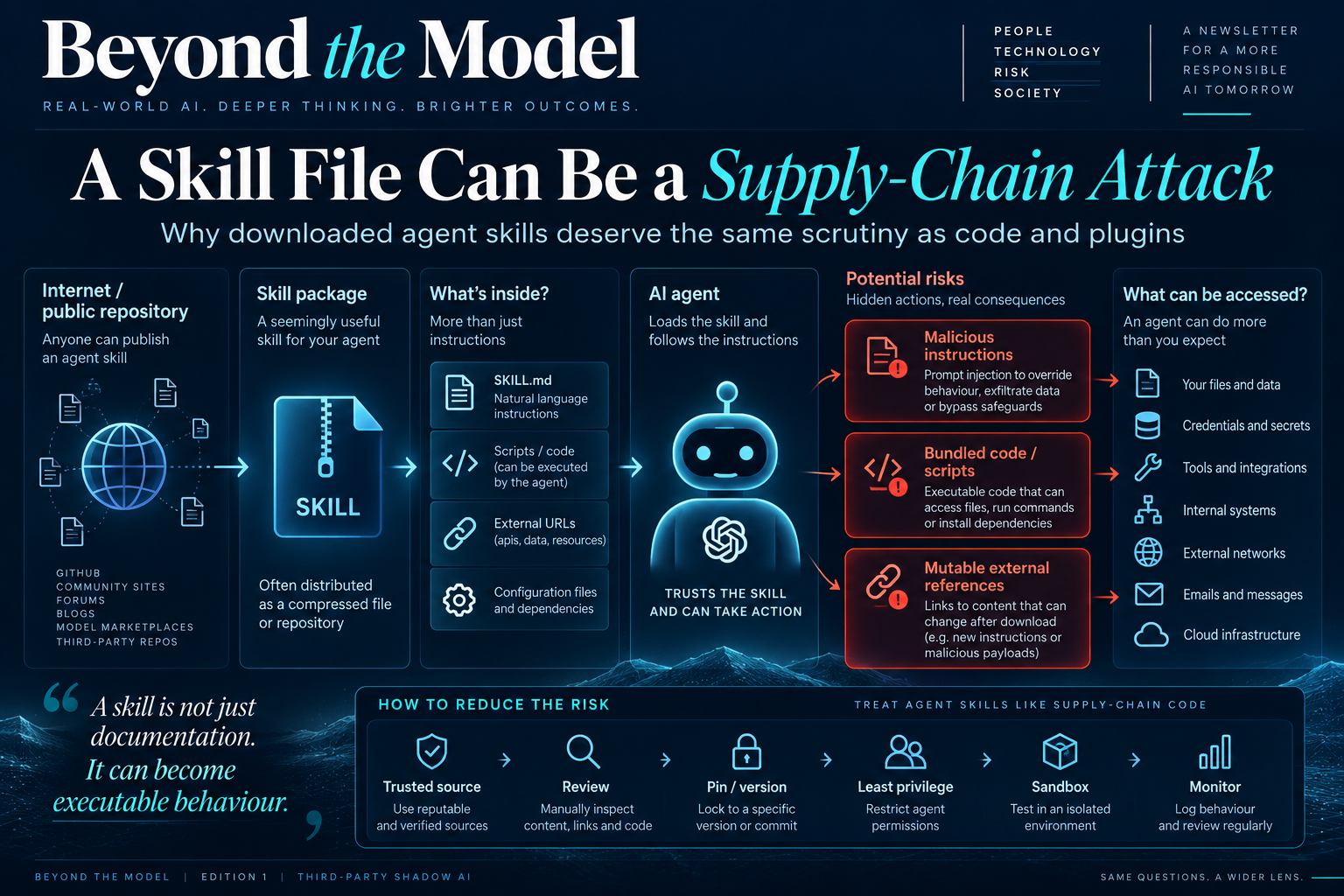
Downloaded instructions, bundled scripts and changing external references can introduce risk into an agent’s workflow.

Online systems can assist discovery, repetition and community formation, but the leap from exposure to extremist violence is not a settled causal chain.
Eight connected disciplines to carry supplier AI governance from discovery through continuity, exit and value.

Eight questions for governing systems that organise attention across childhood, politics and public life.
No articles match those filters. Try another topic or clear the filters.