Governance08

A Framework for Finite Computation
How to evaluate useful intelligence, prepare for competing futures and keep the system around the model accountable.
Framework · 4 min read↗
Put the questions to work
A practical basis for better supplier conversations.
How to evaluate useful intelligence, prepare for competing futures and keep the system around the model accountable.
Eight connected disciplines to carry supplier AI governance from discovery through continuity, exit and value.

Eight questions for governing systems that organise attention across childhood, politics and public life.

Your AI provider is still online—but the model your business depends on has disappeared. What does it take to restore the business capability?

Why changing a model name does not necessarily restore the behaviour, controls or service level an AI product depends on.

The published lifecycle evidence shows why AI infrastructure can have a shorter and more provider-controlled life than it appears.

Portability has a real cost. This decision framework helps judge when the price of an AI escape route is worth paying.

Frontier models could become intelligence foundries. Specialist models, continuity plans and governed operational experience may change what organisations pay for — and what they can preserve.
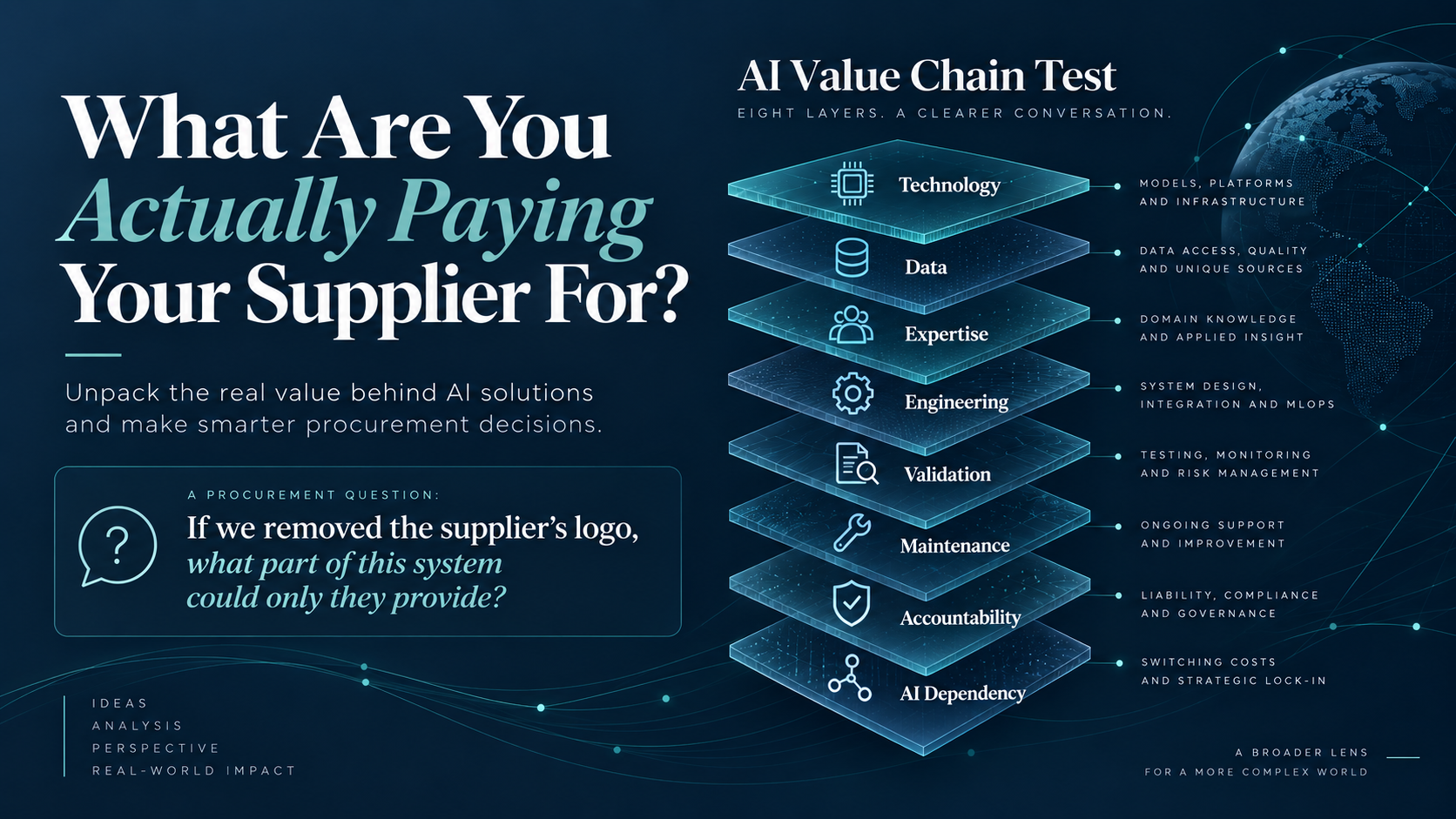
The AI Value Chain Test separates access to common technology from expertise, validation and accountability.
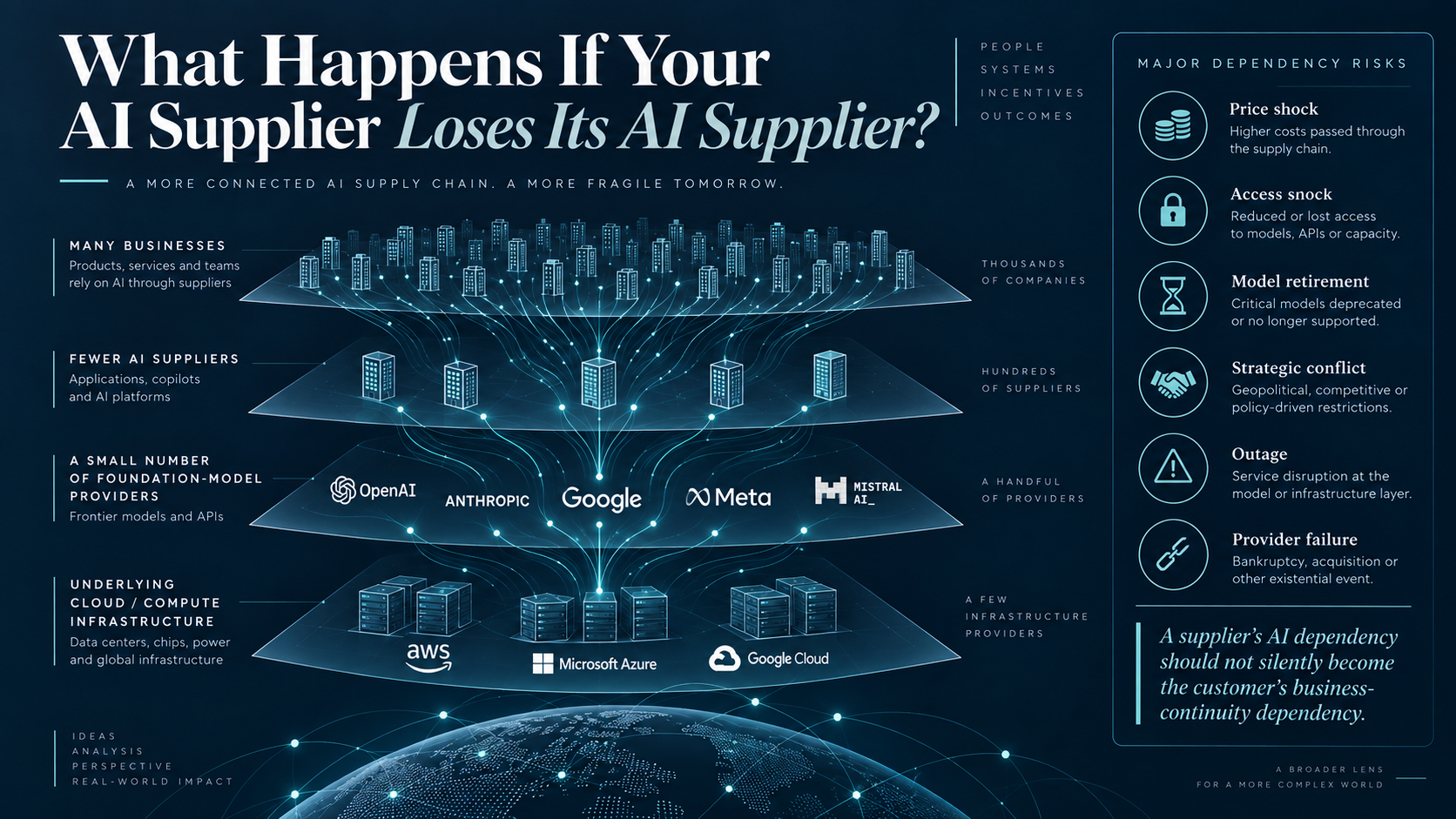
A claim to support multiple models is not the same as a tested plan to keep your service running.
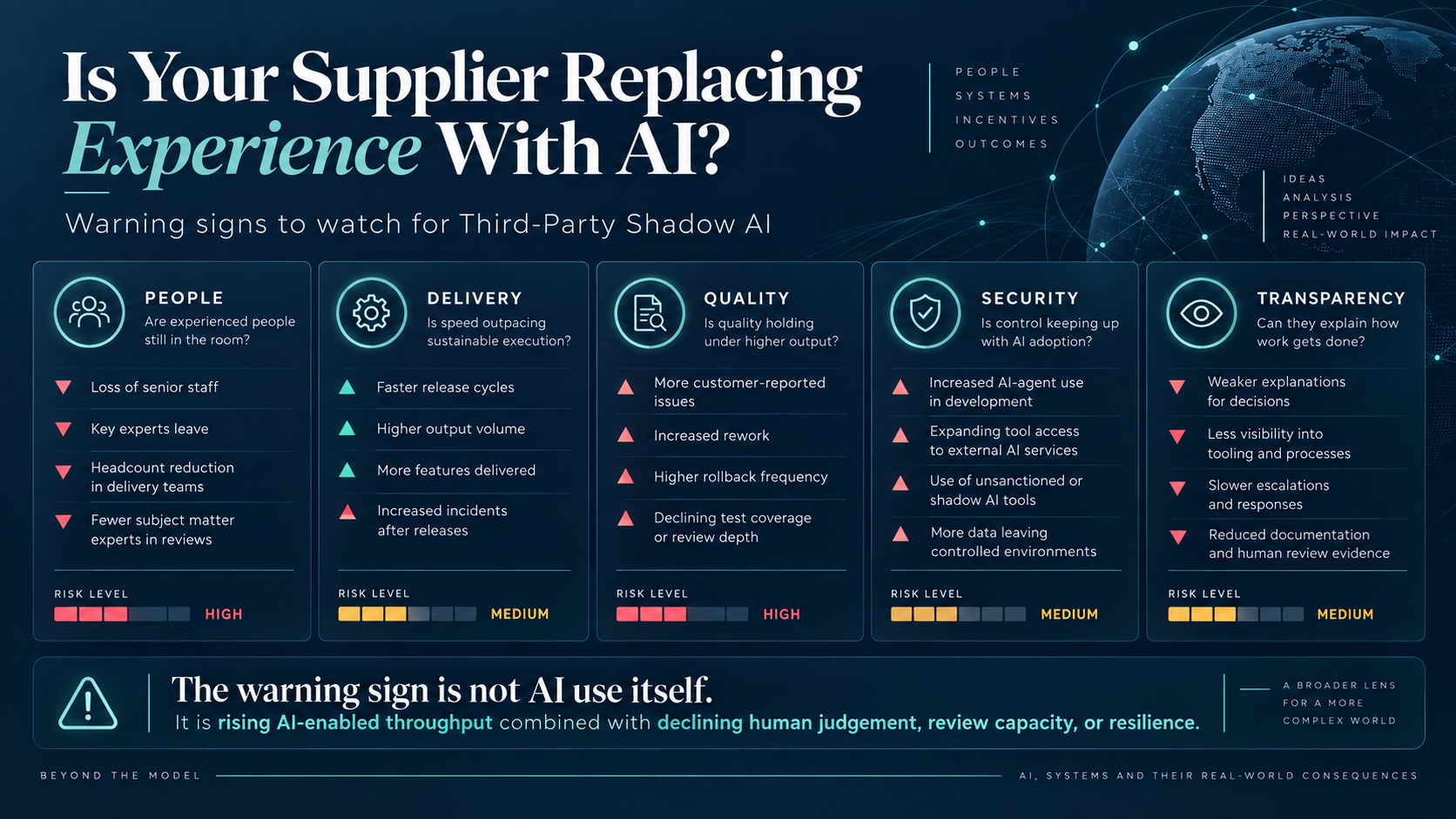
Watch for patterns in review capacity, service quality and technical ownership, rather than treating layoffs or faster releases as proof.